AZ Turf Cleaning Team
Professional turf and landscape specialists serving the Phoenix metro area.
Last updated: 2026-04-09
Last updated: April 2026
What Did the Vancouver Study Actually Find?
Researchers in Metro Vancouver detected chemicals leaching from artificial turf fields into nearby waterways, raising concerns about 6PPD-quinone and other tire-derived compounds in crumb rubber infill. Professional turf cleaning with enzyme treatments and high-pressure rinse cycles removes surface-level chemical residue and reduces runoff contamination from residential turf installations.
CBC News reported that artificial turf fields across Metro Vancouver are releasing chemicals harmful to salmon. The study focused on crumb rubber infill, the black granules made from recycled tires that sit between turf blades.
We read the full report. And honestly, none of it surprised us.
We See the Same Residue on Every Job in Mesa
Our crew cleans 30 to 40 turf yards a month across Mesa, Tempe, Chandler, and Gilbert. On jobs where the turf hasn't been professionally cleaned in over a year, we pull a dark, oily film off the infill surface. That film contains dust, pet waste breakdown, pollen, and whatever the infill is shedding.
In the East Valley, surface temperatures on uncleaned turf hit 160 to 180 degrees between May and September. Heat accelerates chemical breakdown. A turf yard on Baseline Road in Mesa that sits uncleaned through a full Arizona summer will have measurably worse infill degradation than the same yard cleaned quarterly.
How Does Professional Turf Cleaning Address Chemical Residue?
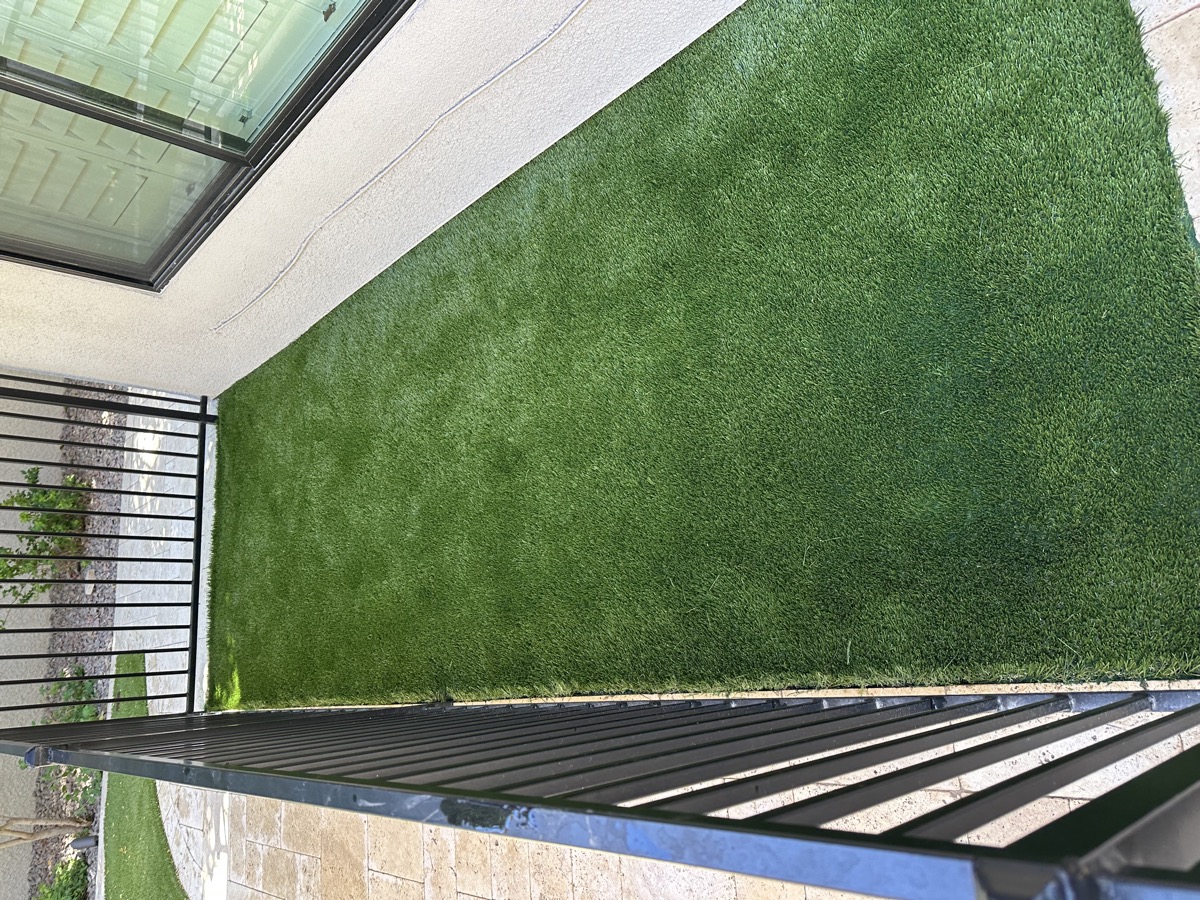
Our process runs in three stages. First, we apply an enzyme-based pre-treatment at 2 oz per gallon concentration. This breaks down organic matter and loosens surface residue from infill particles. Second, we rinse at 1,800 PSI with a turf-safe fan tip, not a zero-degree nozzle that would damage the backing. Third, we apply a deodorizing and sanitizing agent that neutralizes remaining bacteria.
Total time for a 500 sq ft backyard: about 45 minutes. Cost runs $150 to $250 depending on infill type and how long it has been since the last cleaning.
We cannot remove chemicals bonded inside the rubber granules themselves. Nobody can. But we can remove the surface film where those chemicals concentrate after heat exposure, and we can flush contaminants before they build up in the drainage layer.
Does This Affect Residential Turf in Arizona?
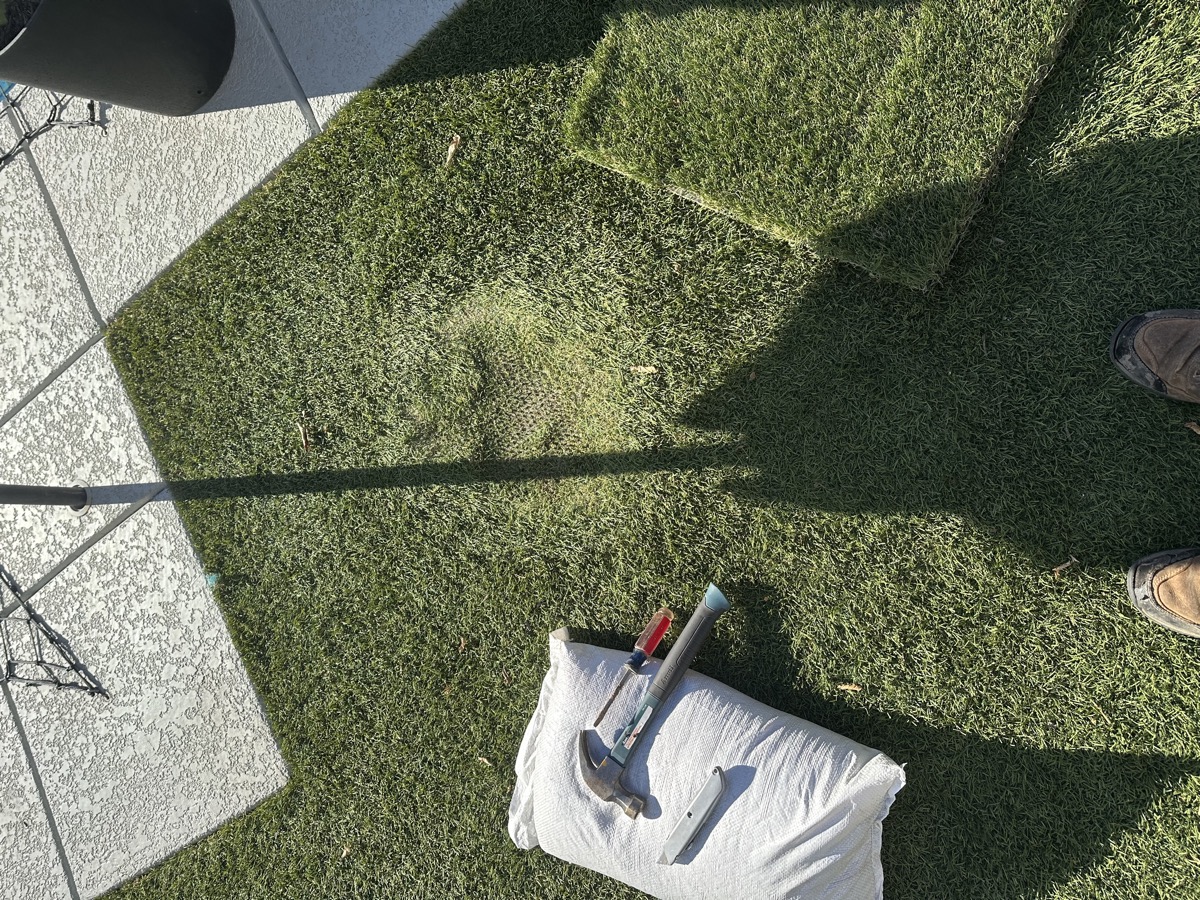
Most residential turf in Mesa uses silica sand or Durafill infill, not crumb rubber. That is a real difference from the municipal sports fields in the Vancouver study. But some older installations, especially yards put in before 2020, do use crumb rubber blends. We run into them in neighborhoods around Dobson Ranch and the Superstition Springs area.
If you are not sure what infill your turf has, grab a handful from between the blades. Crumb rubber is black and spongy. Silica sand is tan and gritty. Durafill is green and coated.
What Should Mesa Homeowners Do Right Now?
If your turf uses crumb rubber infill, quarterly cleaning is worth it for chemical residue alone, on top of the bacteria and odor benefits. Our quarterly clients in Mesa pay $125 to $175 per visit on a maintenance plan.
If your turf uses sand or Durafill, twice-a-year cleaning is enough for most yards without pets. Yards with dogs need quarterly service minimum. We cleaned a yard off Sossaman and McKellips last month where the owner had two German Shepherds and hadn't cleaned the turf in 18 months. The ammonia levels were off the chart.
The Vancouver study confirmed what we see on every job: turf is low-maintenance, not no-maintenance. And in Arizona heat, everything degrades faster.
We serve Mesa, Tempe, Chandler, Gilbert, Scottsdale, Apache Junction, and Fountain Hills. Get a free quote or check out our turf cleaning services to see the full process.