AZ Turf Cleaning Team
Professional turf and landscape specialists serving the Phoenix metro area.
Last updated: 2026-03-23
Last updated: March 2026
What Are the Best Pavers for Arizona Desert Climate?
The best pavers for Arizona desert climate are travertine and porcelain. Both handle 150-degree surface temps without cracking or fading. Concrete pavers work too but need sealing every 18 to 24 months. We install all three across Mesa, Chandler, and Gilbert, with most residential jobs running $12 to $22 per square foot installed.
We have been laying pavers around Mesa since we added hardscaping to our services. And after a few hundred jobs in the East Valley, the patterns are obvious. Some materials hold up. Others do not.
How Much Does Paver Installation Cost in Mesa, AZ?
Straight answer: $12 to $22 per square foot installed, depending on the material and layout complexity. A standard 400 sq ft patio in a Mesa backyard typically runs $5,000 to $9,000 total.
That includes demolition of existing concrete if needed, base prep with compacted road base, sand bedding, paver installation, and polymeric sand joints. Curved designs, borders, and inlays add to the cost. So does access -- if we cannot get a wheelbarrow through your side gate, materials take longer to move.
Paver Cost Breakdown by Material
| Material | Cost per Sq Ft (Installed) | Lifespan in AZ Heat | Sealing Required |
|---|---|---|---|
| Concrete pavers | $12 - $16 | 15 - 20 years | Every 18 - 24 months |
| Travertine | $16 - $22 | 25+ years | Every 2 - 3 years |
| Porcelain | $18 - $24 | 25+ years | None |
| Flagstone | $14 - $20 | 20+ years | Optional |
| Brick | $10 - $15 | 10 - 15 years | Every 12 - 18 months |
Brick is the cheapest option up front. But in Mesa, where summer ground temps can hit 160 degrees, brick fades and cracks faster than anything else we install. We have replaced more brick patios than we have installed at this point.
Why Travertine Wins in the Desert
Travertine stays cooler underfoot. We have measured 20 to 30 degree surface temp differences between travertine and standard concrete pavers on the same patio at 2 PM in July. That matters when you are walking barefoot to your pool.
It also does not fade. A travertine patio we installed near Dobson and Baseline in Mesa three years ago still looks identical to the day we finished it. The concrete paver patio next door at the neighbor's house has already started to bleach out.
The tradeoff: travertine is porous. It absorbs spills and can stain if you do not seal it. We recommend a penetrating sealer applied every two to three years. Cost for sealing a 400 sq ft patio: $200 to $350.
Pavers vs Concrete: Which Lasts Longer in Arizona?
Poured concrete is cheaper up front -- usually $8 to $12 per square foot. But it cracks. Arizona soil expands and contracts with monsoon moisture cycles, and poured slabs cannot flex with it. We see cracked concrete patios on nearly every Mesa street.
Pavers are individual units sitting on a sand bed. They move independently. When the ground shifts, the joints absorb it instead of cracking. And if one paver does break, you replace that single piece for a few dollars instead of jackhammering a whole slab.
What We Tell Homeowners Before Every Paver Job
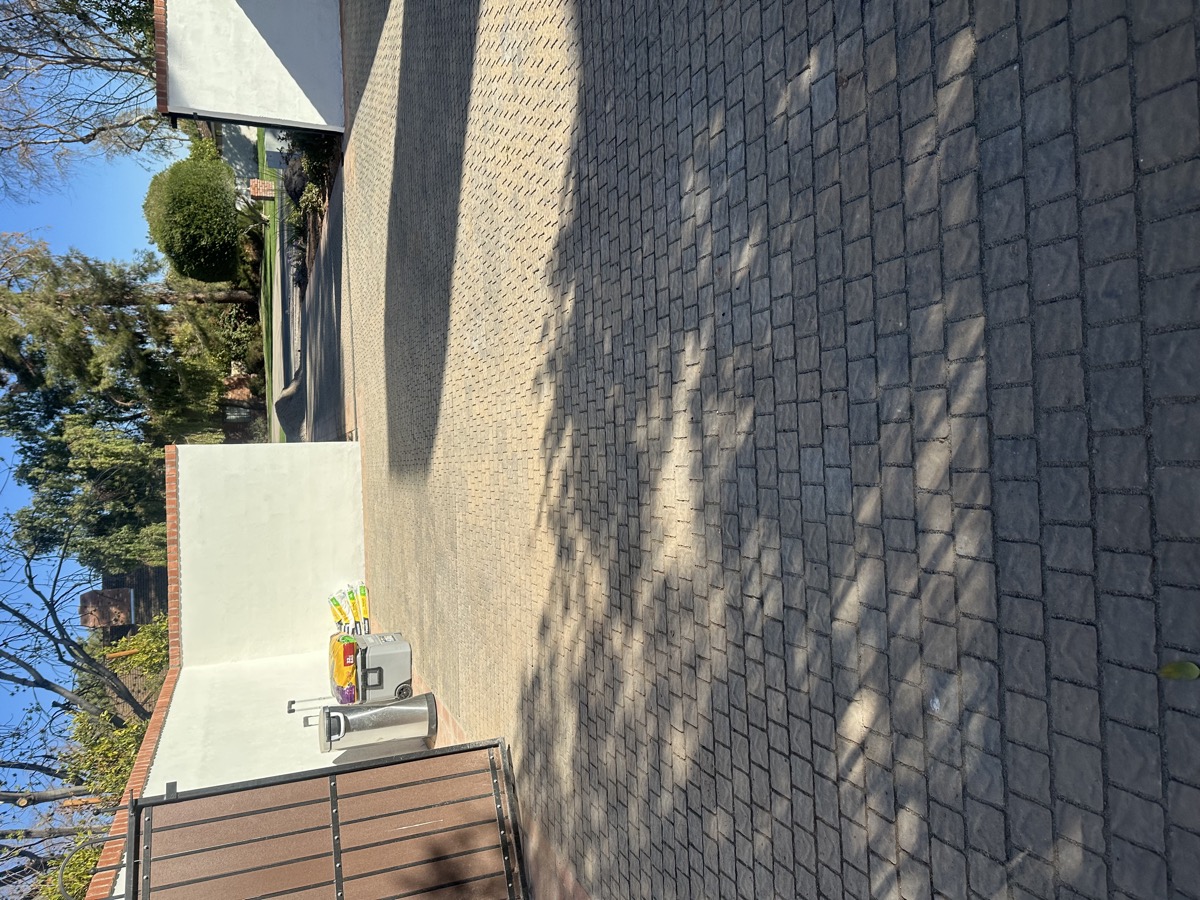
Base prep is everything. We compact a minimum 4-inch road base layer before any sand goes down. Some crews skip this step or use only 2 inches to save time. Those patios shift within a year. We have torn out and redone jobs from other contractors where the base was inadequate.
Polymeric sand is not optional. Regular sand washes out during monsoon season. Polymeric hardens when wet and keeps pavers locked in place. It also prevents weeds from growing between joints -- a constant problem in Mesa where everything wants to grow after a rain.
And drainage matters more than most people think. Mesa sits on caliche in a lot of areas, especially east of Greenfield Road. Water does not drain through caliche. If your patio does not slope away from the house at a minimum 1% grade, you are going to have pooling issues.
Mesa HOA Considerations
Many Mesa HOAs in communities like Las Sendas, Superstition Springs, and Eastmark require architectural review before paver installation. Approval typically takes 2 to 4 weeks. We handle the submittal paperwork for our clients -- just need your HOA contact info and we will take it from there.
Color restrictions are common. Most East Valley HOAs limit you to earth tones -- tans, browns, terracotta. Bright white or gray pavers usually get rejected. We keep samples on hand that we know pass review in the major Mesa communities.
If you are thinking about pavers for your Mesa, Chandler, or Gilbert property, get in touch. We do free on-site estimates and can walk you through material options based on your budget and what your yard actually needs. Check out our hardscaping services page for more on what we offer.